Eric Shabshelowitz

What are Current Cap Rates for Boston Multifamily Investment Property?

alt tag

One of the metrics used by real estate investors to evaluate investment opportunities is called the capitalization rate (or cap rate).  The formula is basically the net annual income divided by the purchase price.  Cap rates do not take mortgages into account – since different investors receive differing financing terms, the cap rate is a quick metric to evaluate an opportunity on a level playing field.


The chart above shows multifamily cap rate trends over the past 10 years, and includes forecasts for the next five.  Boston has maintained a lower cap rate than the national average and is projected to maintain that spread in the coming years.  A lower cap rate means that investors are willing to accept a lower return on their investment, so investors will pay more for multifamilies in Boston because they view it as a stronger investment.

This article is focused on multifamily investment property – cap rates for other property types (e.g. retail and office) are different, and each property type has its own set of risks and rewards to consider.  If you are interested in more market data or have questions about investment property in Boston, please reach out to us.


How to File for a Residential Exemption in Boston

alt tag

If you own and live in your Boston property as your primary residence, you likely qualify for a residential exemption on your real estate taxes.  Through this exemption, the City releases you from paying part of your property taxes.  Last year, the residential exemption saved qualified homeowners up to $2,719.09 on their tax bill.

For Fiscal Year 2020, you have until April 1, 2020 to file the application.  For more information, including the application and other requirements, visit the City of Boston’s website here

There are a number of benefits to homeownership, and this exemption is one of them.  Be sure to take advantage!


Boston Landlords: 10 Tips for Renting an Apartment that is Still Vacant

alt tag

September 1st has come and gone. Boston’s prime rental season is over and the number of renters out there has decreased sharply. However, all is not lost. Here are 10 tips to help get that apartment leased:

1.  Make Necessary Repairs.  If something is clearly broken (e.g. cracked windows, doors that do not close, etc.), many prospective renters will see that as a red flag. 

2.  Deep Cleaning.  Has the apartment been cleaned since the last tenant moved out? Prospective tenants this time of year generally have more options and are more likely to scrutinize unclean apartments.    If the apartment windows have not been cleaned (inside and out), that is a must-do to help maximize the natural light.

3.  Freshen Up the Paint and Floors.  Without furniture, scuff marks become focal points.  Not only will a fresh coat of paint help the apartment show better, but now is the best time to get that done since there are no tenants to work around. The same is true with the floors – refinishing hardwood floors and replacing carpet (with new carpet or hardwood flooring) can make a world of difference.

4.  Improve Curb Appeal.  Depending on the type of rental that you own, there may be limits to what you can do to improve the curb appeal.  However, for prospective renters, their evaluation of your apartment begins even before they step into the unit.  Put yourself in their shoes and walk-up to the building – how does the landscaping look, is the mail in boxes or scattered in the foyer, are the common areas clean, are the hallway lights working?

5.  Take New Pictures.  Nearly all renters’ searches begin online, so pictures will make the first impression. If you have been using the same pictures, take new pictures to give a fresh look.

6.  Consider Going Pet-Friendly.  For renters with pets, they will ONLY look at pet-friendly apartments.  If you have been advertising your apartment as not accepting pets, then there is a new audience of tenants that you could reach. However, careful consideration needs to be given here – for instance, some condo associations prohibit pets.

7.  Change the Lease End Date.  Consider entering a lease until June 1st, rather than doing a lease until September 1st. September 1st has tended to be the biggest turnover date in Boston, but June 1st is a popular lease turnover date too. Additionally, if you miss a tenant for June 1, then you still have several months of “prime” rental season to work with.

8.  Maximize Your Listing Exposure.  Working with a real estate broker can help maximize your exposure.  For instance, here at Cabot & Company we utilize a number of listing and advertising platforms in order to reach tenants.  Not only does the tenant typically pay the brokerage fee, but we provide a credit check and manage the lease signing and collection of upfront payments.

9.  Offer Incentives.  Agreeing to pay all or half of the broker’s fee can help alleviate a renter’s upfront moving costs.  If the renter needs to come up with the first month’s rent, last month’s rent, month security deposit and a broker fee, that can work out to a sizable amount. Foregoing the requirement for the last month’s rent and/or accepting a lower security deposit can also help.

10.  Consider a Rent Reduction.  This is the last tip, but probably the most important.  If you have already tried some/all of the tips above, then the market is saying that you are asking too much.  It is also important to consider the impact of missing an additional month’s rent as opposed to reducing your asking rent – generally, you find that the numbers work out that you are better off agreeing to a lower rent for a sooner move-in date than missing out on a few months of rent while chasing a higher rent.


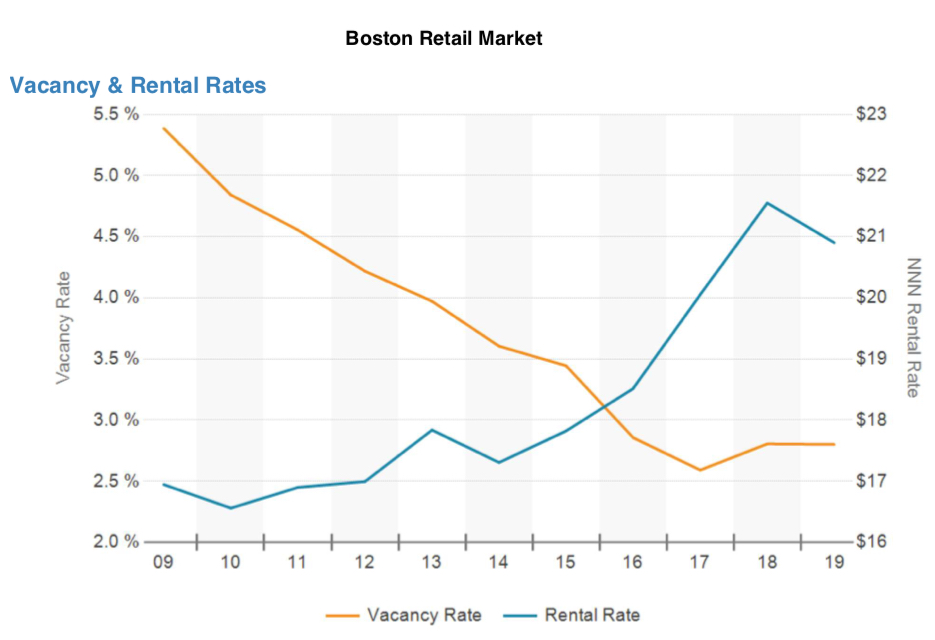
Boston Retail Market Update - Fall 2019

alt tag

With Labor Day Weekend upon us, retailers are gearing up for the Fall/Holiday season.  It is a good time to take a look at the forecast for the retail market.  The news highlights trade tensions with China, the low interest rate environment and continued speculation that the U.S. economy is "due" for a recession.  But continued job growth is [...]

Parking Spots for Sale in Boston

alt tag

Ever wonder what it is like to own your own parking space in Boston? Just finding parking alone is time consuming, stressful and can often take a good amount of change out of your pocket if you are renting one daily.  Beat the weather, save time/money and please check out some of the open parking spaces within Back Bay, South End and Beacon [...]

New Short-Term Rental Law

alt tag

Gov. Baker of Massachusetts signed into law a bill regulating and taxing any kind of "short-term rental" (that is, any rental for 31 days or less).  There is an exemption for properties that are leased out for 14 days or less per calendar year, but this law is expected to have a substantial impact on owners that rent vacation homes and utilize services such as Airbnb and VRBO.

This new law takes effect on July 1, 2019.  Hosts are obligated to register with the State and their local municipality, carry $1 million in liability insurance per unit, and possibly be subjected to inspections that will vary from city to town.  Additionally, short-term rentals will be subject to new taxes and fees, including, but not limited to, a state tax of 5.7%, local taxes up to 6% (Boston can levy up to 6.5%; Cape Cod and Islands can levy up to 8.75%) and "community impact fees" of up to 3% may be levied locally on professionally managed properties (owners of 2 or more units in one town).

It will be interesting to see what impact this will have on tourism and business travelers, particularly if cities and towns decide to max out the allowable fees and taxes. 

See additional details at marealtor.com/ShortTermRentals.  

Disclaimer: This article should not be construed as legal or tax advice.  If you own, operate or are considering owning or operating a short-term rental property, we recommend that you seek guidance from a lawyer and/or tax professional.  


41-50 of 74 Posts