Mortgage rates have moved higher again heading into October, adding another layer to the affordability conversation for homebuyers.
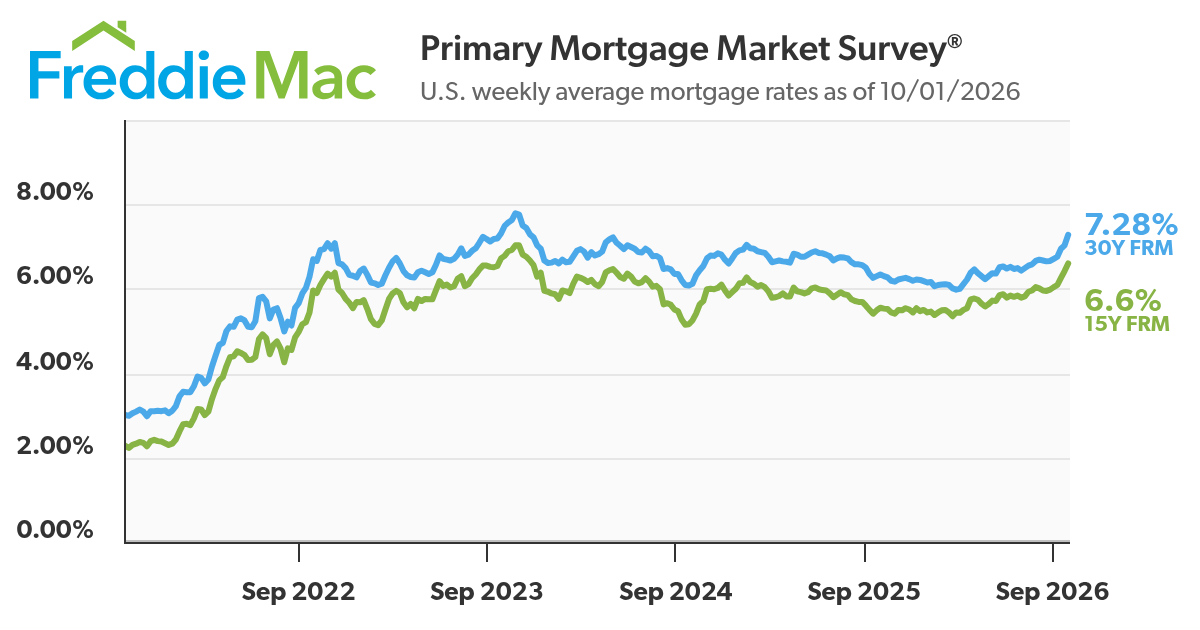
According to Freddie Mac, the average 30-year fixed mortgage rate reached 7.28% as of October 1, 2026, up from 7.03% the previous week. The average 15-year fixed mortgage increased to 6.60%, up from 6.42%.
For buyers who had been hoping to see rates move back toward the 6% range, the recent increase is a reminder that the path downward is unlikely to be a straight line.
The Five-Year View
As the first chart shows, mortgage rates have changed dramatically over the past several years. Buyers who purchased or refinanced in 2020 and 2021 became accustomed to historically low mortgage rates. By 2022, however, rates began climbing rapidly, eventually moving above 7%. Since then, the 30-year fixed rate has generally remained in the 6–7% range, with periods of improvement followed by renewed increases.
The latest move to 7.28% puts rates back toward the higher end of the range buyers have experienced over the past few years.
A Longer-Term Perspective
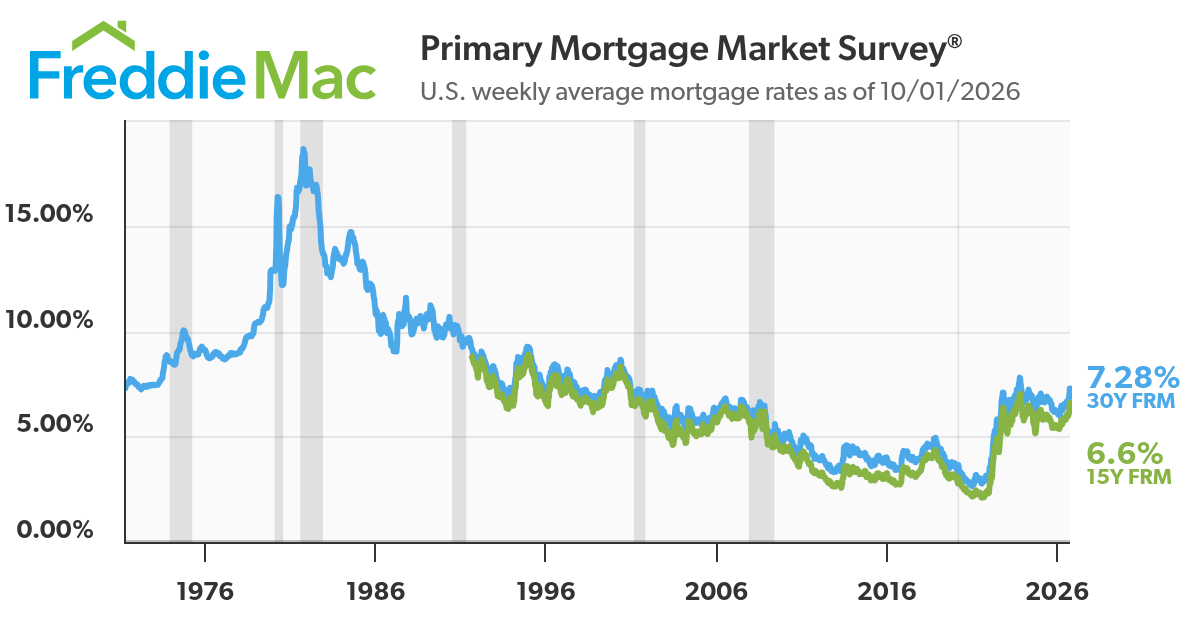
The historical chart provides some useful context.
While a mortgage rate above 7% feels high compared with the ultra-low rates of just a few years ago, it is far from unprecedented. Mortgage rates exceeded 10% for much of the early 1980s and at one point climbed well above 15%.
At the same time, today's buyers face a very different affordability equation. Home prices are substantially higher than they were decades ago, particularly in markets like Greater Boston, which means even relatively small movements in mortgage rates can have a meaningful impact on a buyer's monthly payment and purchasing power.
What Does This Mean for Buyers?
Trying to perfectly time mortgage rates can be difficult. A better approach is often to evaluate the entire purchase rather than focusing solely on the interest rate.
For buyers actively looking today, that means considering the price of the property, monthly payment, available inventory, negotiating leverage and how long they expect to own the home. Buyers may also have the opportunity to refinance in the future if rates decline, although there is never a guarantee that they will.
Higher rates can also create opportunities. When borrowing costs rise, some prospective buyers step to the sidelines, potentially reducing competition for properties and creating additional negotiating leverage for those who remain active.
And for Sellers?
Mortgage rates matter to sellers as well.
Higher financing costs can reduce the size of the buyer pool and make pricing increasingly important. Properties that are positioned and priced appropriately can still attract strong interest, but buyers are generally more sensitive to value when their monthly borrowing costs are elevated.
For anyone considering buying or selling this Fall, the key is to understand how today's financing environment affects your specific numbers rather than making a decision based solely on a mortgage-rate headline.