Boston's luxury real estate market continues to distinguish itself, with high-end condominium prices showing notable strength and long-term trends highlighting the enduring appeal of owning property in the city.
From historic Back Bay residences to contemporary penthouses overlooking Boston Harbor, the city's luxury condominium market encompasses an exceptional range of properties. While each offers a different lifestyle, they share something increasingly important to discerning buyers: access to one of the country's most established and distinctive urban real estate markets.
As we move into the final quarter of 2026, recent sales figures reveal several interesting trends in Boston's luxury housing market.
Luxury Condominium Prices Outpace the Broader Market
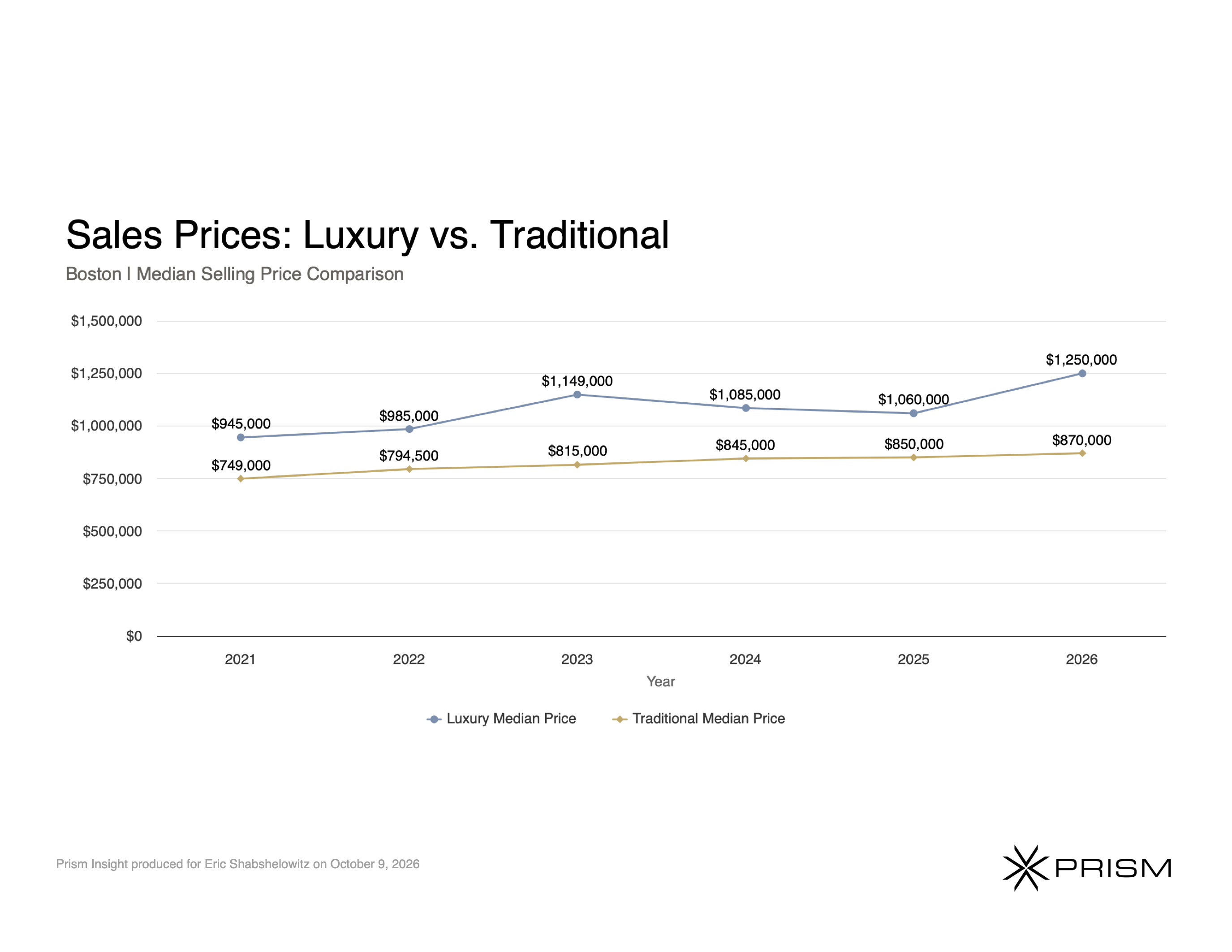
Perhaps the most striking development is the divergence between luxury condominium prices and the traditional market.
According to data from PRISM, Boston's luxury condominium median selling price reached $1,250,000 in 2026, compared with $1,060,000 in 2025—an increase of approximately 18%.
During the same period, the traditional condominium segment experienced a more modest increase, with its median price rising from $850,000 to $870,000, or approximately 2.4%.
The difference is noteworthy. While broader market conditions continue to influence real estate activity, the luxury segment has demonstrated distinctive pricing trends.
Several factors may help explain this divergence, including the mix of properties sold, the influence of high-value new developments, and the unique characteristics of Boston's premium housing inventory.
Importantly, increases in median sale prices do not necessarily represent appreciation of individual properties. Changes in the size, location, and quality of homes sold can also influence overall market figures
The Bigger Picture: Nearly Two Decades of Price Growth
While recent pricing trends are compelling, the longer-term perspective is equally interesting.
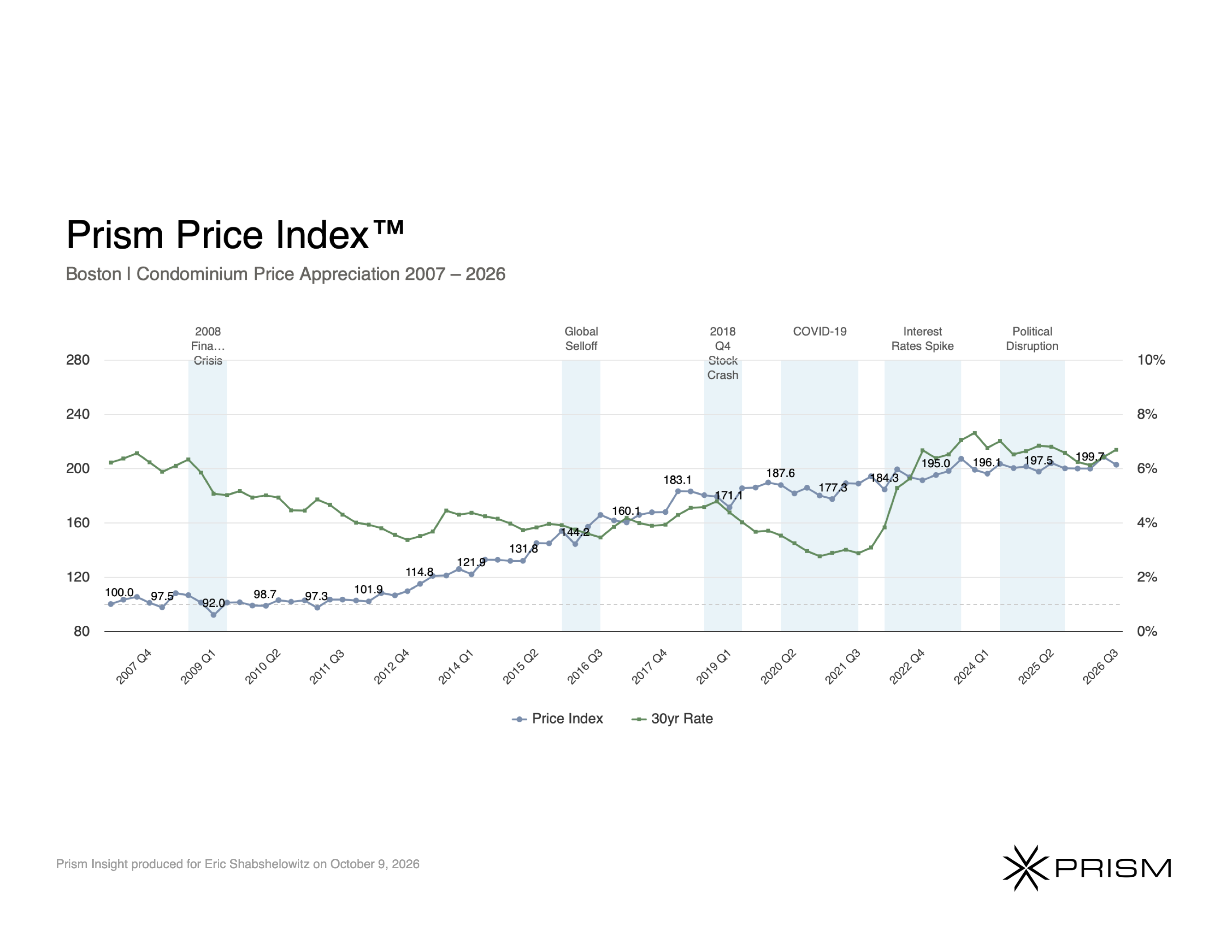
The Prism Price Index provides a view of Boston's condo market through nearly two decades of economic change. From the 2008 financial crisis to the pandemic and the subsequent period of rising interest rates, Boston's housing market has experienced numerous shifts. Yet the index has advanced from a baseline of 100 in late 2007 to approximately 200 in 2026.
That represents an approximate doubling of the index over the period, despite intervals of declining or relatively flat prices.
For luxury buyers, this history offers a useful perspective: market conditions may influence the timing of a purchase, but real estate ownership is often evaluated over a much longer horizon.
For existing homeowners, it illustrates why understanding both current market conditions and long-term pricing trends is important when considering a sale.
The index covers the broader condominium market rather than luxury properties exclusively, but it provides valuable context for Boston's overall residential real estate performance.
Boston's Broader Condominium Market Remains Near Record Price Levels
Looking beyond the luxury segment, Boston's overall condominium statistics tell a story of a market operating at elevated price levels.
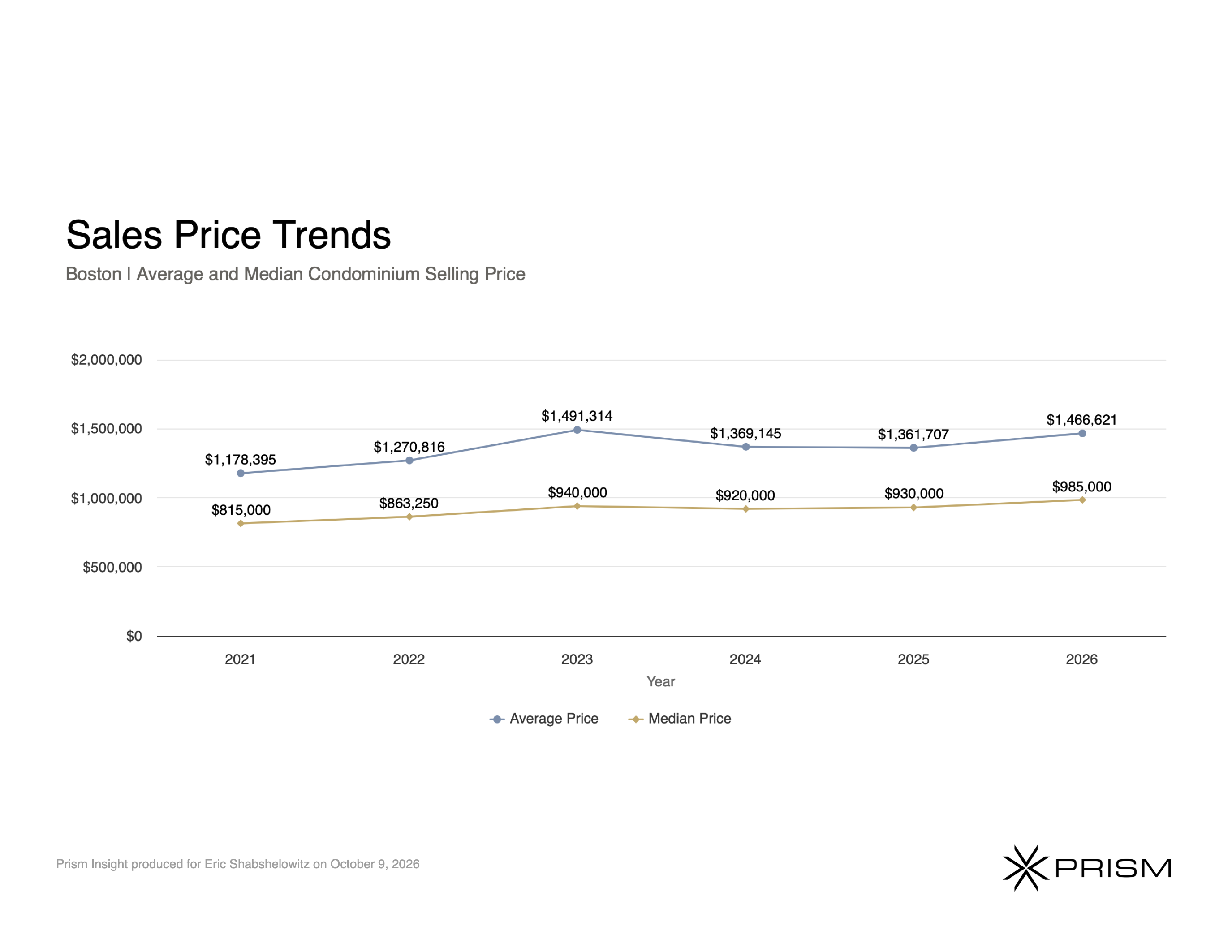
The city's median condominium selling price reached $985,000 in the 2026 reporting period, compared with $930,000 in 2025. Meanwhile, the average selling price climbed to approximately $1.47 million, up from $1.36 million.
The substantial difference between average and median prices also illustrates an important characteristic of Boston's market: high-priced transactions can have an outsized influence on citywide averages. In a city where condominium sales range from modest urban residences to multimillion-dollar penthouses, a single market-wide statistic rarely tells the complete story.
What Does This Mean for Luxury Buyers and Sellers?
For prospective buyers, the latest figures reinforce the importance of evaluating properties individually rather than relying exclusively on market-wide trends. Location, architectural character, building amenities, outdoor space, views, and renovation quality can all play meaningful roles in determining value.
For sellers, the data offers an encouraging perspective, but effective pricing remains essential. Even within a strong luxury market, the most successful sales strategies begin with an understanding of how a property compares with competing residences.
Boston's luxury real estate market is not defined by a single price point or housing style. Its appeal lies in a combination of history, architecture, lifestyle, and the limited availability of truly distinctive properties.
As 2026 draws to a close, the numbers suggest a market that continues to command attention—not simply for its prices, but for the long-term value that buyers and homeowners associate with Boston real estate.