From the timeless elegance of Back Bay to the contemporary waterfront residences of the Seaport, Boston's luxury real estate market offers a remarkable variety of homes—and an equally fascinating range of prices.
Luxury in Boston has never been defined by a single neighborhood or architectural style. For some buyers, it means a beautifully restored brownstone on a tree-lined street, surrounded by historic architecture and neighborhood charm. For others, it is a residence high above the city, complete with panoramic views, private amenities, and the conveniences of a full-service building.
Recent condominium sales data provides an interesting look at how Boston's most sought-after neighborhoods compare—and how a new generation of luxury developments is contributing to the city's residential landscape.
A Neighborhood-by-Neighborhood Look at Luxury
Boston's established luxury neighborhoods continue to command impressive prices, although the differences between locations reveal just how varied the market can be.
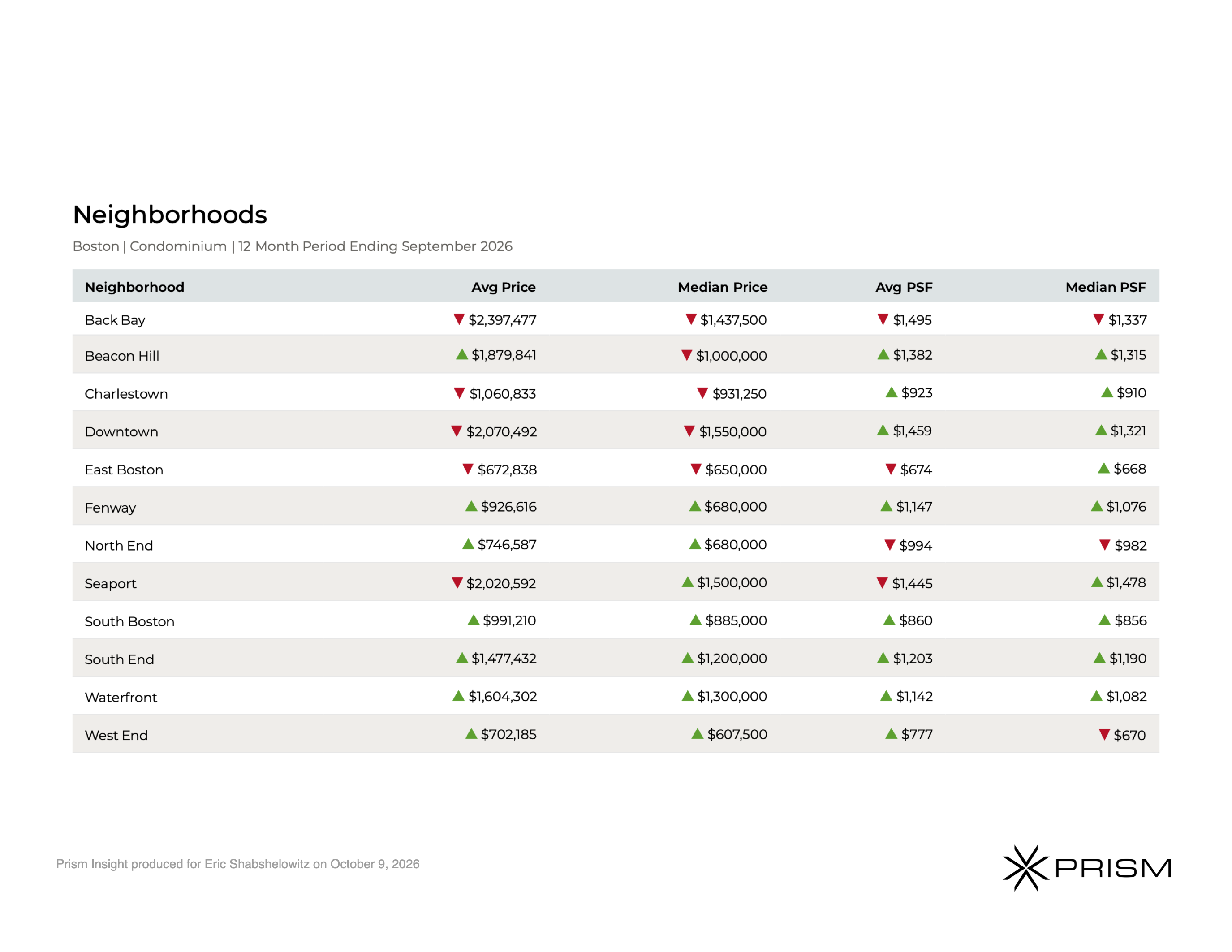
In Back Bay, the average condominium selling price reached approximately $2.40 million during the 12-month period ending September 2026, with a median price of $1.44 million.
The neighborhood's enduring appeal is easy to appreciate. Historic architecture, proximity to the Public Garden and Commonwealth Avenue Mall, and the shopping and dining destinations of Newbury and Boylston Streets contribute to its distinctive identity.
Beacon Hill remains another cornerstone of Boston luxury, with an average condominium selling price of approximately $1.88 million. Its Federal-style architecture, gas-lit streets, and intimate neighborhood character offer a residential experience that is difficult to replicate.
Across the city, newer luxury destinations tell a different story.
Downtown Boston recorded an average condominium selling price of approximately $2.07 million, influenced in part by its collection of high-end residential towers. The Seaport, meanwhile, posted a median selling price of $1.5 million and a median price per square foot of $1,478—among the highest figures in the neighborhoods surveyed.
The South End also continues to distinguish itself, with an average condominium selling price of approximately $1.48 million. Its combination of historic townhouses, contemporary residences, neighborhood restaurants, and cultural attractions gives the area a distinctive appeal.
These figures highlight an important reality: luxury values in Boston are driven by more than square footage alone. Neighborhood character, architecture, property condition, views, amenities, and proximity to the city's most desirable destinations all contribute to the equation.
The New Era of Full-Service Luxury Living
While Boston's historic residential neighborhoods remain highly desirable, the city's newer luxury condominium developments offer a compelling alternative.
Today's premium residential towers increasingly emphasize an integrated lifestyle, where design, services, convenience, and amenities are central elements of the ownership experience.
Several developments illustrate the scale of Boston's upper-tier market.
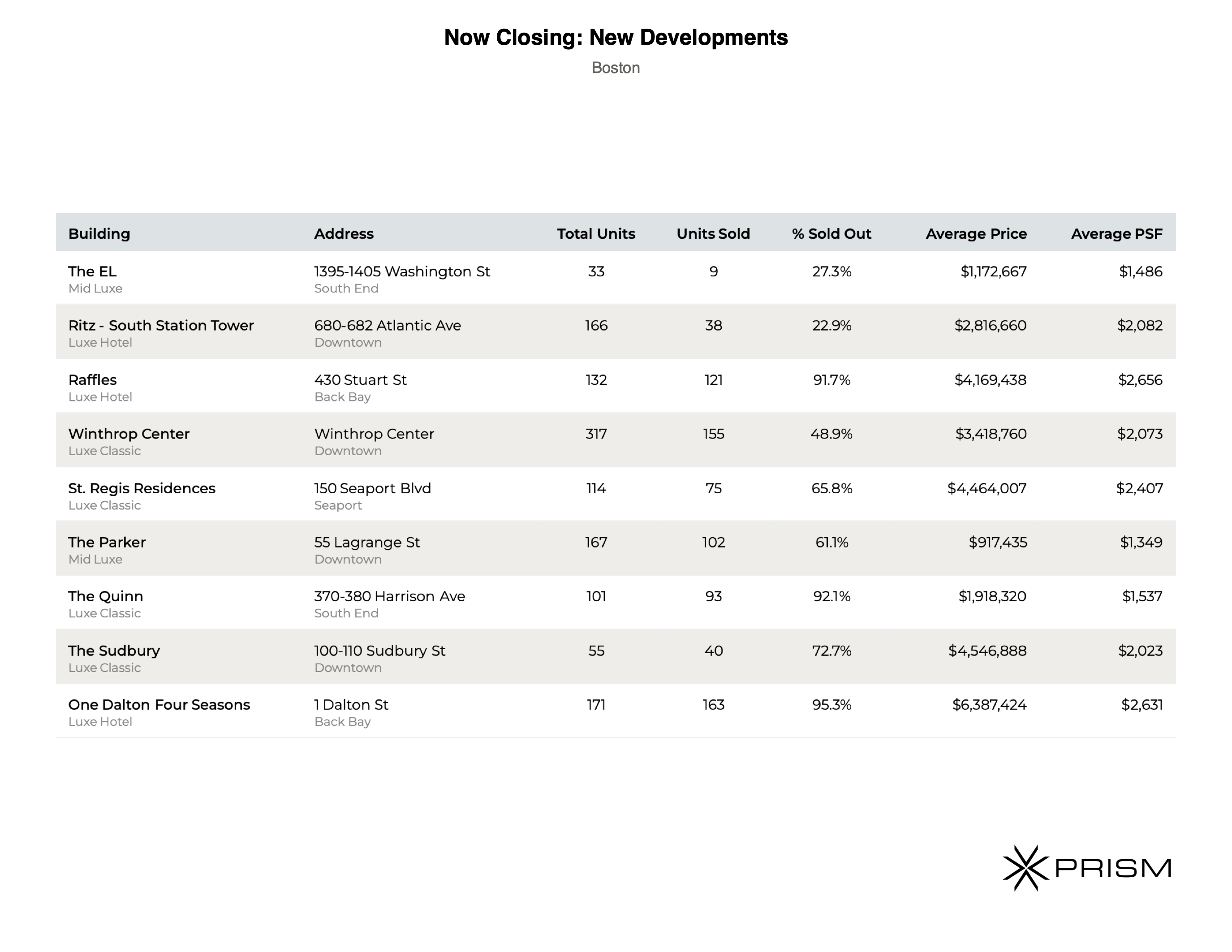
At One Dalton, home to the Four Seasons Private Residences, the average closed condominium sale price stands at approximately $6.39 million, with an average price per square foot of $2,631.
Raffles Boston, located in Back Bay, has recorded average closing prices of approximately $4.17 million, while the St. Regis Residences in the Seaport has achieved an average of approximately $4.46 million.
These properties represent a distinct segment of the market, where hotel-associated services, contemporary finishes, dramatic views, and extensive building amenities can play a central role in the buying decision.
Other developments provide additional insight into Boston's evolving luxury inventory.
Winthrop Center, in Downtown Boston, has recorded an average closed sale price of approximately $3.42 million, while The Quinn in the South End has achieved an average of approximately $1.92 million.
The sales progress of these developments also varies considerably. Prism Insight's data shows One Dalton approximately 95% sold, Raffles approximately 92% sold, and Winthrop Center approximately 49% sold, based on the reported condominium closings.
These differences reflect varying stages of sales activity and provide insight into how Boston's luxury development landscape continues to evolve.
Historic Elegance or Contemporary Convenience?
One of the most interesting aspects of Boston's luxury market is the choice between two distinctly different ownership experiences.
A historic Back Bay or Beacon Hill residence may offer architectural details, private entrances, intimate outdoor spaces, and the character that comes with owning a piece of Boston's past.
By contrast, a newer luxury condominium tower may offer concierge services, fitness and wellness amenities, garage parking, expansive glass walls, and the convenience of a professionally managed residential environment.
Neither represents a universally superior investment or lifestyle choice. Rather, their differences reinforce why understanding a buyer's individual priorities is so important.
For prospective sellers, these distinctions are equally meaningful. Marketing a historic townhouse condominium requires a different approach from positioning a residence within a luxury tower. Recognizing what makes a property distinctive—and which buyers are most likely to value those features—is central to a successful sales strategy.
Boston's Luxury Market Offers More Than One Definition of Exceptional
As Boston continues to evolve, its luxury housing market benefits from the coexistence of historic neighborhoods and contemporary residential developments.
New buildings add choices for buyers seeking modern amenities and turnkey convenience. Established neighborhoods continue to offer the architecture, character, and sense of place that have helped define Boston for generations.
For buyers exploring their next home, this variety creates an unusually rich selection of living experiences. For existing homeowners, it reinforces the importance of understanding how their properties fit within a sophisticated and increasingly diverse luxury marketplace.
Ultimately, Boston's most desirable real estate is not simply about the highest price or most impressive address. It is about finding the exceptional combination of location, design, character, and lifestyle that makes a residence truly distinctive.